

A property's architectural integrity is no longer measured solely by its foundation or facade, but by the invisible data infrastructure that powers it. For developers in Ghana, integrating robust broadband for new housing developments has evolved from a luxury utility into a foundational requirement that dictates long-term asset value. With the government's "Dig Once" policy expected by the third quarter of 2026, the strategic importance of planning for fibre chambers during the initial construction phase cannot be overstated.
You've likely seen how a premium estate's reputation can suffer from fragmented connectivity or the high costs of retrofitting fibre once the walls are closed. It's a common frustration to build a modern masterpiece only to face tenant complaints about inconsistent Wi-Fi in common areas or multi-dwelling units. This guide shows you how to implement engineered network infrastructure and managed Wi-Fi solutions that enhance property value and resident satisfaction. We'll examine how a professional network design creates a future-proof environment, providing seamless internet coverage from the front gate to the individual unit through a reliable, hands-off management model.
Key Takeaways
- Understand why high-performance connectivity is now a primary architectural requirement that directly influences the marketability and asset value of premium residential estates in Ghana.
- Learn how to integrate broadband for new housing developments through professional network design that ensures seamless coverage from gated entrances to individual units.
- Discover the "silent partner" advantage of managed Wi-Fi systems, which eliminate the burden of tenant technical support while providing superior reliability compared to standard ISP models.
- Identify the critical steps for early-stage infrastructure planning to avoid the excessive costs and structural disruptions of retrofitting fibre after construction is complete.
- Explore how to future-proof your development with scalable network solutions that support the next generation of smart home features and digital lifestyle demands.
The Strategic Importance of Broadband in Modern Housing Developments
High-performance residential broadband in 2026 is no longer defined by simple download speeds. It represents a comprehensive ecosystem of symmetrical connectivity, ultra-low latency, and pervasive coverage. For developers in Ghana, digital infrastructure has transitioned from a secondary utility to a primary asset class. Luxury estate buyers now prioritize connectivity with the same intensity they once reserved for prime locations or high-end finishes. They recognize that a home's functional value is tethered to its digital capacity.
The market has shifted from individual household connections toward community-wide managed ecosystems. Fragmented connectivity creates dead zones and management headaches that diminish a property's prestige. By contrast, a unified network offers a seamless experience that supports high-density usage across common areas and private units. This centralized approach shares some structural philosophies with municipal broadband networks, focusing on efficiency and high-standard delivery. Integrating robust broadband for new housing developments ensures that properties remain competitive, directly influencing long-term desirability and rental yields.
Connectivity as a Foundational Amenity
Digital requirements now rival traditional utilities like power and water in terms of necessity. A managed internet infrastructure significantly reduces the administrative burden on property management by centralizing support and monitoring. It's the essential backbone for modern smart home integrations. Without a professional network design, sophisticated IoT devices like climate sensors and integrated security systems cannot function reliably. Stable, engineered connectivity ensures these high-end features perform as intended, preserving the developer's brand reputation.
Meeting National Infrastructure Standards in Ghana
Aligning with Ghana’s evolving digital landscape is a strategic necessity for modern developers. With the National Communications Authority opening 5G spectrum licenses in July 2026, the demand for high-capacity backhaul is surging. Projects must meet rigorous residential network standards to satisfy both regulatory requirements and savvy investors. Early-stage engagement with infrastructure specialists is vital. This proactive planning anticipates the upcoming "Dig Once" policy, ensuring that broadband for new housing developments is integrated during the initial construction phase to avoid the prohibitive costs of future retrofitting.
Engineering High-Performance Infrastructure for MDUs and Estates
Deploying robust broadband for new housing developments requires a departure from traditional, reactive installation methods. In a modern residential cluster, the network is a physical asset that demands the same level of engineering precision as the plumbing or electrical systems. Professional network design ensures that the "last-mile" challenge within a gated community isn't just solved, but optimized for long-term stability. This involves integrating fibre-to-the-premises (FTTP) with sophisticated community-wide Wi-Fi mesh systems to create a unified digital environment.
Technical requirements for high-performance delivery are complex. A developer must account for signal attenuation, backhaul capacity, and the specific hardware needed to maintain symmetrical speeds. Understanding the technical nuances of different delivery methods is essential for choosing the right backbone, as detailed in this FCC Guide to Broadband Technologies. Developers seeking to optimize their projects often benefit from professional network design that accounts for these structural variables from day one, ensuring the infrastructure supports the project's lifecycle.
Tailored MDU Solutions for High-Density Living
Multi-Dwelling Units (MDUs) present unique engineering hurdles, particularly regarding signal interference in multi-storey apartment complexes. When dozens of individual routers operate in close proximity, they compete for airtime, leading to degraded performance for all residents. A centralized network management model eliminates this fragmentation. By utilizing high-concurrency access points designed to handle hundreds of devices simultaneously, developers can guarantee consistent performance even during peak usage hours. This systematic approach replaces the chaos of individual unit connections with a stable, enterprise-grade ecosystem.
Seamless Roaming Across Gated Communities
The hallmark of a premium development is the "One Network" experience. Residents shouldn't lose connectivity when moving from the entrance gate to the gym or their private balcony. Achieving this requires meticulous planning of hand-off protocols between access points. Managed Wi-Fi in common areas, clubhouses, and parks must be engineered to recognize a user's device and transition it between nodes without a drop in service. This level of pervasive coverage transforms the entire estate into a connected workspace, significantly increasing the property's appeal to the growing demographic of remote professionals in Ghana.
Managed Wi-Fi vs. Traditional ISPs: A Comparative Analysis
Choosing the right service model for broadband for new housing developments determines whether connectivity remains a developer's asset or a management liability. Standard ISP models operate on a transactional basis, delivering a signal to the property line and leaving internal distribution to the individual resident. This fragmented approach often fails in complex residential environments where structural density and community-wide expectations demand a more integrated solution. It's the difference between a simple utility pipe and a fully engineered ecosystem.
A managed Wi-Fi model functions as a "silent partner" for developers. It replaces the reactive nature of traditional providers with proactive lifecycle management. This shift moves the responsibility of technical support and network maintenance away from the property manager and into the hands of specialized engineers. Comparing service level agreements (SLAs) reveals a stark contrast; while traditional ISPs offer best-effort consumer support, managed ecosystems provide robust uptime guarantees backed by continuous monitoring. This ensures that the high-end residents of Ghana's premium estates receive the stability they expect from a luxury investment.
The Limitations of Consumer-Grade ISP Connections
Individual tenant contracts frequently lead to a "Wi-Fi jungle" within multi-dwelling units. When every resident installs a separate router, the resulting radio frequency interference degrades performance for everyone, regardless of the advertised speeds. This technical chaos creates hidden operational costs. Property managers often find themselves mediating connectivity disputes they aren't equipped to solve. Additionally, unmanaged residential clusters are prone to security vulnerabilities, as individual consumer routers lack the enterprise-grade firewalls necessary to protect a community-wide network from sophisticated digital threats.
The Benefits of a Managed Wi-Fi Ecosystem
A centralized managed Wi-Fi system offers several strategic advantages for premium developments:
- Centralized Technical Support: Residents have a single point of contact for all connectivity issues, entirely bypassing the property management team.
- Proactive Network Monitoring: Engineers identify and resolve potential bottlenecks or hardware failures before they impact the resident experience.
- Scalable Bandwidth Allocation: The system dynamically adjusts bandwidth based on community demand, ensuring high performance during peak hours for all users.
- Enhanced Data Protection: Professional management incorporates advanced encryption and security protocols that consumer-grade hardware simply cannot match.
While the initial infrastructure investment for a managed system involves more planning than standard broadband for new housing developments, the long-term operational ease provides a superior return on investment. It ensures the network remains a stable, engineered component of the building's overall value proposition, supporting higher rental yields and long-term resident retention.
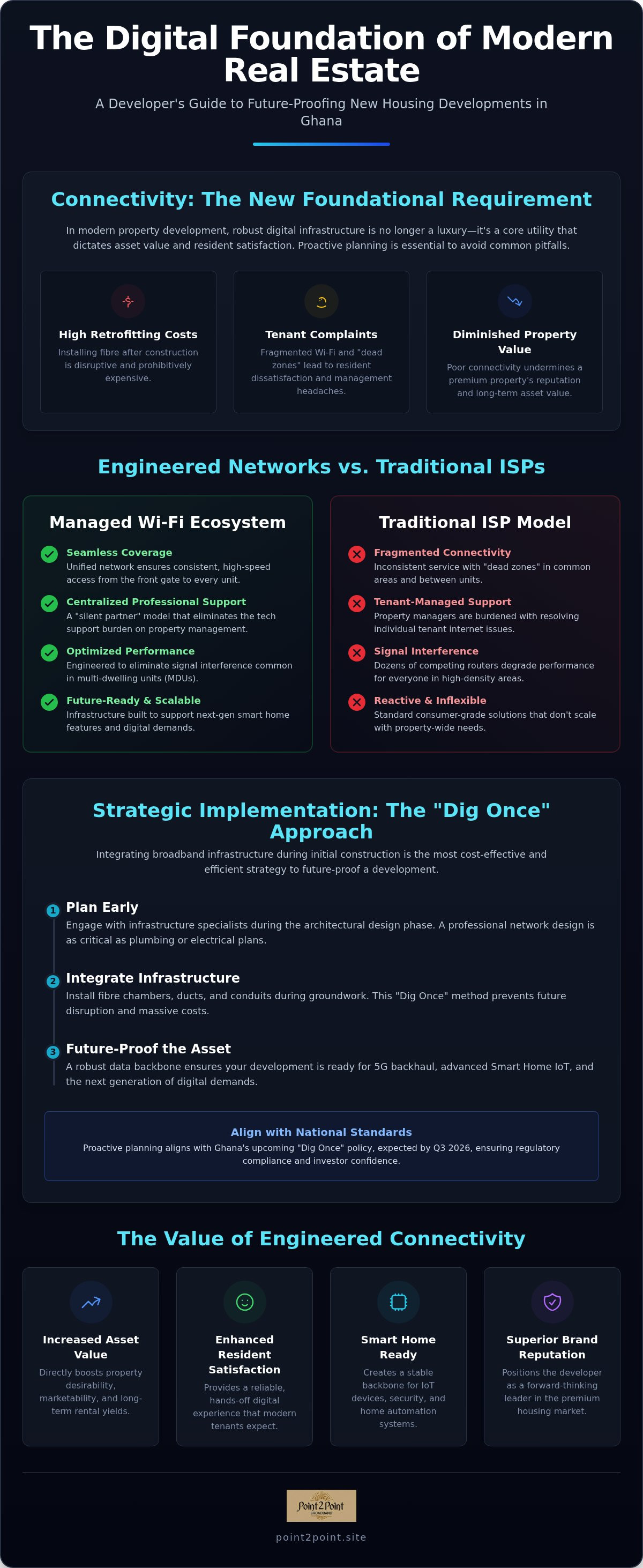
Strategic Implementation: Future-Proofing New Housing Projects
Successful integration of broadband for new housing developments requires a methodical, four-step engineering process. It begins with early-stage professional network design and site auditing. This phase occurs alongside the initial architectural planning, ensuring that signal propagation is modeled before the first brick is laid. By identifying potential structural barriers early, developers avoid the reactive "patchwork" connectivity that plagues poorly planned projects.
The second step involves coordinated installation during the active construction phase. Laying fibre and high-grade cabling while the building's skeleton is exposed significantly reduces labor costs. Step three shifts to the rigorous testing and deployment of managed access points, where each node is calibrated to ensure seamless roaming. Finally, step four establishes ongoing technical support and network lifecycle management. This comprehensive oversight ensures the infrastructure remains a high-performing asset long after the initial sale or lease. Developers looking to secure their property's digital future should partner with professional network design experts to manage the entire implementation lifecycle.
Scalability and Lifecycle Management
Designing infrastructure for the 2026 market means preparing for 10Gbps and beyond. Modular hardware choices allow for systematic upgrades as technology evolves without requiring new cabling or structural disruptions. Network lifecycle management is a proactive maintenance strategy that involves continuous monitoring, systematic hardware updates, and performance optimization to prevent system obsolescence. This approach guarantees that the network grows in parallel with the residents' data demands.
Professional Installation Best Practices
Precision in the physical layer is paramount. Avoiding common pitfalls, such as improper cable shielding or exceeding maximum bend radiuses, prevents long-term signal degradation. In luxury developments, the aesthetic integration of hardware is just as critical as its performance. Access points must be discreetly positioned to maintain the interior design's integrity while providing maximum coverage. Utilizing certified technicians for estate-wide deployments ensures that the installation meets global engineering standards, protecting the developer's investment from the risks of amateur workmanship. Integrating broadband for new housing developments through these professional standards creates a reliable, high-end environment that modern tenants in Ghana demand.
Point 2 Point: Elite Broadband Solutions for Ghana’s Developers
Point 2 Point Broadband provides the specialized engineering required to transform standard residential clusters into high-value digital assets. Our MDU solutions and estate-wide network designs are tailored specifically for the premium tier of Ghana's real estate market. We understand that for an elite developer, connectivity isn't just a utility; it's a reflection of the property's architectural integrity. By delivering robust broadband for new housing developments, we ensure that every resident experiences the stability and performance expected in a modern luxury environment.
Our national reach across Ghana allows us to deploy high-end engineering expertise to any major residential cluster. We manage the entire network lifecycle, from the initial professional design to ongoing resident support. This end-to-end model positions us as a silent partner, allowing developers to focus on construction and sales while we handle the complexities of digital infrastructure. We maintain a commitment to precision, ensuring that the network is as durable and reliable as the physical structure it serves.
Why Leading Developers Partner with Point 2 Point Broadband
Reputation in the Ghanaian market is built on technical excellence and reliable delivery. Point 2 Point Broadband has established itself as an authoritative expert in residential infrastructure, offering a level of sophistication that standard utility providers cannot match. Our systems integrate seamlessly into existing property management workflows. This reduces the administrative burden on your team, as we handle technical disputes and network optimizations directly. Gated communities that have transitioned to our managed ecosystems report a significant decrease in connectivity-related complaints and a measurable increase in resident satisfaction scores.
Elevate Your Development Today
Integrating an engineered network adds a premium layer of value to your development portfolio. It signals to potential buyers and investors that the project is future-proof and designed for the demands of the 2026 digital economy. The process begins with a professional network audit of your site. During this audit, our engineers evaluate structural variables and capacity requirements to create a bespoke deployment plan. This proactive approach ensures that your development stands out as a leader in connectivity and modern living standards. To begin your infrastructure transformation, consult with our visionary engineers on your next project and secure the digital foundation of your estate.
Securing the Digital Foundation of Your Development
The transition toward community-wide managed ecosystems represents a fundamental change in how modern estates are engineered. Integrating robust broadband for new housing developments ensures your project meets the high-performance standards required by today's residents while avoiding the structural disruptions and costs of future retrofitting. By prioritizing professional network design during the early stages of architectural planning, you establish a scalable infrastructure that supports both current digital lifestyles and future smart home innovations.
Point 2 Point serves as a reliable silent partner, providing the technical expertise necessary to maintain architectural integrity and resident satisfaction. Our expert MDU network designers offer national coverage across Ghana, delivering premium managed connectivity specifically tailored for luxury estates and high-density residential clusters. This systematic approach guarantees that your network remains a stable, high-value asset for the entire lifecycle of the property.
Secure your development's future with Point 2 Point Managed Wi-Fi. We're ready to assist you in building a more connected and valuable property portfolio.
Frequently Asked Questions
What is the difference between standard broadband and managed Wi-Fi for estates?
Managed Wi-Fi is an engineered, community-wide ecosystem, while standard broadband is a fragmented, individual utility. Standard models leave distribution to residents, often resulting in signal interference and dead zones. A managed system provides centralized oversight, ensuring pervasive coverage and enterprise-grade security across the entire development. This model functions as a silent partner for developers, delivering a consistent experience that standard ISP contracts cannot replicate.
At what stage of construction should I involve a broadband provider?
Developers should involve a broadband provider during the initial architectural planning phase. Integrating connectivity requirements early ensures that fibre paths and equipment rooms are included in the structural design. This proactive approach aligns with Ghana’s upcoming "Dig Once" policy, significantly reducing the labor costs associated with retrofitting infrastructure after the building is complete. Early engagement guarantees the network's long-term technical performance.
Can managed Wi-Fi be installed in existing housing developments?
Retrofitting managed Wi-Fi into existing developments is entirely possible through a comprehensive site audit. While new builds offer the easiest integration, established estates benefit from professional network design to resolve historical connectivity issues. Engineers evaluate the existing structural layout to strategically place access points, overcoming signal barriers. This process revitalizes older properties, bringing their digital infrastructure up to modern, high-performance standards.
How does managed broadband improve property value for developers?
Managed broadband improves property value by establishing a high-end digital amenity that appeals to affluent residents. Integrating professional broadband for new housing developments serves as a differentiator in a competitive real estate market. High-performance connectivity supports smart home features and remote work, which are top priorities for modern buyers. This strategic investment leads to higher occupancy rates and increased long-term asset appreciation.
What is an MDU solution and why is it necessary for apartments?
An MDU solution is a specialized network architecture designed to handle the high-density requirements of multi-dwelling units. Standard residential setups fail in apartment complexes due to massive signal interference between competing routers. MDU systems use centralized management to coordinate frequencies and bandwidth, ensuring every unit receives a stable, symmetrical connection. This level of precision is essential for maintaining the prestige of luxury high-rise developments.
Does Point 2 Point provide technical support directly to residents?
Point 2 Point manages all technical support directly for residents, providing a hands-off experience for property developers. Our engineers monitor the network 24/7 and resolve most issues remotely before they impact the user. When residents require assistance, they contact our support team directly. This arrangement eliminates the need for property managers to mediate connectivity disputes, allowing them to focus on core estate operations.
How does community-wide roaming work in a gated estate?
Community-wide roaming utilizes a unified network of access points governed by intelligent hand-off protocols. As a resident moves from the gym to their private balcony, the system automatically transitions their device to the strongest signal node. This seamless hand-off occurs without a drop in connection or the need to re-authenticate. It creates a "One Network" experience that covers every square meter of the gated estate.
What are the infrastructure requirements for a professional network design?
Professional network design requires high-capacity backhaul, dedicated vertical and horizontal conduit paths, and centralized equipment housing. These physical requirements must be engineered to support the high-concurrency demands of modern broadband for new housing developments. Proper ventilation and power redundancy for core hardware are also critical. Establishing this robust physical layer ensures the network can scale as data demands grow over the coming decade.
